The Question Every Oak Lawn Parent Is Asking — And Deserves a Real Answer
You’ve heard the concern before: “Won’t lifting weights stunt my kid’s growth?” It’s one of the most common things parents bring up before their child starts training — and it’s worth addressing head-on, not brushing aside. The short answer is no. The longer answer is what this guide is for.
Youth strength training safe practices, backed by decades of research, show that resistance training is not only safe for young athletes — it’s one of the most beneficial things you can add to a child’s development. The key word is how it’s done. Supervision, age-appropriate programming, and proper technique aren’t optional — they’re everything.
At Grit + Grace Sports Academy, serving Oak Lawn, Chicago Ridge, and the south-side Chicago area, Coach Eddie works with athletes starting as young as 4 years old. Here’s what the science says — and what experience on the field confirms.
What the Research Actually Says About Kids and Strength Training

The American Academy of Pediatrics has been clear on this: strength training programs for children and adolescents, when properly designed and supervised, are safe and can meaningfully improve muscular strength, endurance, and overall fitness. That’s not a fringe opinion — that’s the gold standard of pediatric medicine.
The National Strength and Conditioning Association (NSCA) goes even further. Their position statement confirms that the injury rate in supervised youth resistance training is actually lower than in many traditional youth sports like football, soccer, and basketball. Let that sink in. The sport your child is already playing may carry more injury risk than a properly run strength session.
The data lines up with what coaches see in the gym every day. Kids who train with proper form and appropriate loads don’t break down — they build up. They move better, recover faster, and show up to their sport more prepared than their peers who never trained at all.
The Real Cause of Youth Strength Training Injuries (It’s Not the Weights)
Here’s the honest part most fitness content skips over: injuries in youth strength training do happen — but not for the reason parents fear. The American Academy of Pediatrics is direct about this. Resistance training injuries in youth most commonly result from improper technique, excessive loads, or lack of qualified adult supervision — not from strength training itself.
In other words, it’s not the barbell. It’s the bad coaching. Or worse — no coaching at all. A 10-year-old watching YouTube and loading up a bar unsupervised is a recipe for injury. A 10-year-old learning a bodyweight squat from a certified, experienced coach is building a foundation that protects them for life.
This is exactly why youth athletic training at Grit + Grace prioritizes movement quality before load, and why every session is led by Coach Eddie — NAYS-certified and CPR/First Aid trained — not handed off to an assistant who’s learning on the job.
| Factor | High Risk (Unsupervised) | Low Risk (Properly Coached) |
|---|---|---|
| Supervision | None or unqualified | Certified, experienced coach |
| Load Selection | Excessive or age-inappropriate | Age-appropriate, progressive |
| Technique Focus | Ignored in favor of weight | Movement quality first, always |
| Program Design | Random, copied from adults | Periodized, sport-specific |
| Recovery | Overlooked | Built into the plan |
| Injury Rate vs. Youth Sports | Comparable to contact sports | Lower than most youth sports (NSCA) |
The Best Age Window — and Why You Shouldn’t Wait
Parents often ask when to start. The answer might surprise you: earlier than you think. The National Alliance for Youth Sports (NAYS) Long-Term Athletic Development framework identifies ages 9–12 as a critical “Learn to Train” window — a sensitive period for motor skill development where fundamental movement patterns are easiest to establish and hardest to unlearn if missed.
That doesn’t mean kids under 9 can’t train. It means the approach changes. For younger athletes — ages 4 through 8 — the focus is on coordination, body awareness, and sport play. For athletes 9 and up, introducing structured strength and movement work pays compounding dividends in speed, injury prevention, and athletic confidence. Check out how speed and agility training for young athletes at Grit + Grace is designed with this developmental window in mind.
The CDC recommends that children ages 6–17 get at least 60 minutes of moderate-to-vigorous physical activity daily, with muscle-strengthening activities included at least 3 days per week. Most kids in our area aren’t hitting that target. Structured training isn’t extra — it’s filling a gap that matters.
And according to the Aspen Institute Project Play 2022 report, only 38 percent of kids ages 6–17 played a team or individual sport at least one day per week in 2021. The majority of young athletes are underserved when it comes to structured physical development. That’s not a stat to scroll past — it’s a call to act.
What “Safe” Strength Training Actually Looks Like in Practice
Safe doesn’t mean soft. It means smart. At Grit + Grace Sports Academy, youth strength training safe programming starts with a conversation — about the athlete’s age, sport, goals, and movement history. No two athletes train the same way, which is why 1-on-1 sessions exist alongside group options.
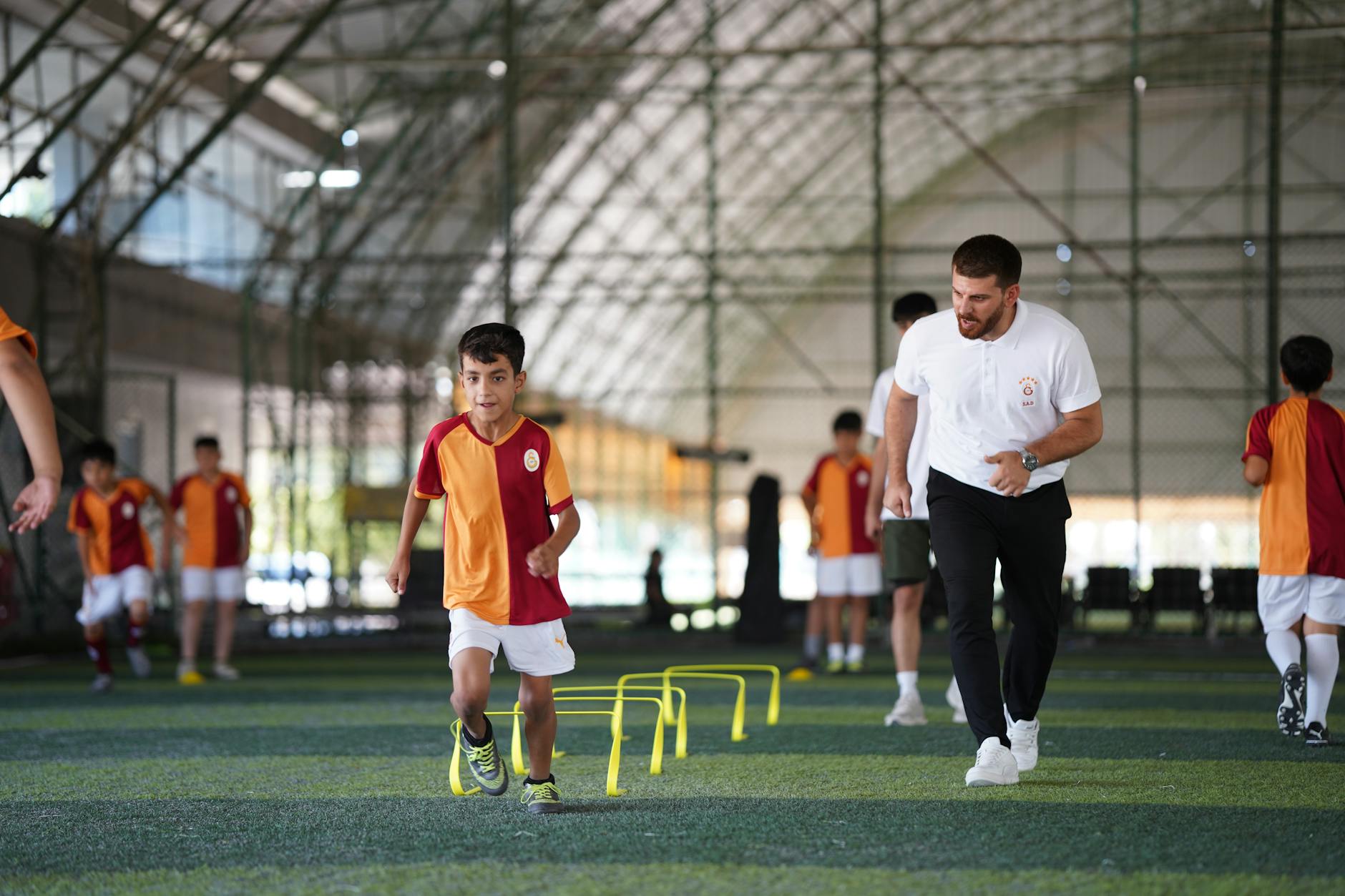
For younger athletes, “strength training” might look like lateral shuffle drills, medicine ball work, and resistance band exercises. For a 14-year-old linebacker getting ready for high school football, it looks more like trap bar deadlifts, single-leg squats, and power development work. Both are strength training. Both are appropriate — when the coach knows the difference.
Coach Eddie tracks progress with every athlete. That accountability isn’t just motivating — it’s a safety mechanism. When a coach knows where an athlete started, they know when fatigue is accumulating, when form is breaking down, and when it’s time to pull back before something goes wrong. That’s the difference between a program and a workout.
Faith-driven training also plays a role here. Building character alongside physical strength — grit, discipline, respect for the process — shapes how athletes approach effort and how they respond to failure. Faith and character development at Grit + Grace isn’t an add-on. It’s woven into every session, because iron sharpens iron in more ways than one (Proverbs 27:17).
What Parents in Oak Lawn and Chicago Ridge Should Look For in a Youth Trainer
Not every trainer who works with kids is qualified to work with kids. That’s a hard truth worth saying out loud. When you’re evaluating a youth athletic trainer, here’s what actually matters: certification from a recognized organization (like NAYS), demonstrated experience with youth athletes specifically, and a coaching philosophy that puts development before ego and character before trophies.
Red flags? A trainer who loads young athletes with heavy weights on day one. One who can’t explain the “why” behind an exercise. One who runs group sessions so large that your child is essentially unsupervised. Or one who has no plan for what happens when an athlete gets hurt, fatigued, or discouraged.
Coach Eddie has been on the other side of this. He rebuilt his own body — losing over 100 pounds — through the same disciplined, faith-driven approach he brings to every athlete he trains. That lived experience isn’t a marketing story. It’s proof that the process works, and it shapes the empathy he brings to every kid who walks onto the field or into the gym unsure of what they’re capable of.
If your child is in Oak Lawn, Chicago Ridge, or anywhere on the south side of Chicago, and you want a coach who will give them a real, personalized, safe foundation — this is what Grit + Grace was built for. Start with a look at our youth athletic training programs and see what’s possible.
Ready to take the first step? Book a free session — fill out the quick form and Coach Eddie will set up a time that fits your athlete’s goals, their sport, and their schedule. No pressure. No commitment. Just a real coach, ready to work.
Leave a Reply