The Training Decision That Actually Shapes Your Kid’s Development
Every parent wants their young athlete to improve — faster cuts, a stronger shot, more confidence on the field. But before you book a session, there’s one question worth answering first: should your kid train one-on-one with a coach, or alongside a group of peers? The answer isn’t the same for every athlete, and getting it wrong can slow progress or kill motivation.
This isn’t about which format looks better on paper. It’s about what actually moves the needle for your kid — at their age, skill level, and stage of development. Here’s what the research says, what Coach Eddie has seen firsthand in Oak Lawn and Chicago Ridge, and how to make the right call.
Why the Format of 1 on 1 vs Group Athletic Training for Kids Matters More Than Most Parents Realize
Parents often assume all athletic training is basically the same — just show up and work hard. But structure matters enormously, especially for younger athletes. The Long-Term Athlete Development model identifies the ages of roughly 6–12 as critical windows where foundational movement skills are best developed through structured, age-appropriate training under qualified supervision. Miss that window with the wrong format, and kids can pick up bad habits that take years to undo.
At the same time, the Aspen Institute Project Play report found that 45 percent of children ages 6–12 participated in team sports in 2022, while individual skills-based training has grown as families seek more personalized athletic development. Parents are paying closer attention — and asking smarter questions about how their kids train, not just where.
That shift makes sense. Structure, coaching quality, and individualization all affect outcomes more than the number of hours logged. So let’s break down both formats honestly.

The Case for 1-on-1 Training: Every Rep Is Yours
One-on-one training puts your athlete in the spotlight — every minute, every rep, every correction. For a kid who’s behind in a specific skill, recovering from a setback, or preparing for a tryout, that undivided attention can fast-track development in ways group settings simply can’t match.
The National Strength and Conditioning Association (NSCA) emphasizes that individualized program design — accounting for a child’s training age, physical maturity, and skill level — is essential for maximizing performance outcomes and minimizing injury risk. That’s not possible in a group of 10 kids running the same drill at the same intensity.
1-on-1 also removes social pressure. Quieter kids, newer athletes, or those who shut down when they feel embarrassed will often push harder and learn faster in a private setting. Coach Eddie has seen this repeatedly with athletes in the youth athletic training programs in Oak Lawn and Chicago Ridge — a kid who barely spoke in a group setting became one of the hardest workers once the dynamic shifted to one coach, one athlete.
One-on-one sessions also allow for real-time progress tracking. Every session has a purpose, a benchmark, and a clear target. That kind of accountability builds discipline and confidence simultaneously.
1-on-1 training is likely the right fit if your athlete:
- Is a beginner learning foundational movement patterns
- Has a specific skill gap (footwork, shot mechanics, first-step explosion)
- Struggles with confidence or gets lost in group environments
- Is preparing for a specific tryout, combine, or sport season
- Has a physical limitation or needs a modified training approach
The Case for Group Training: Iron Sharpens Iron
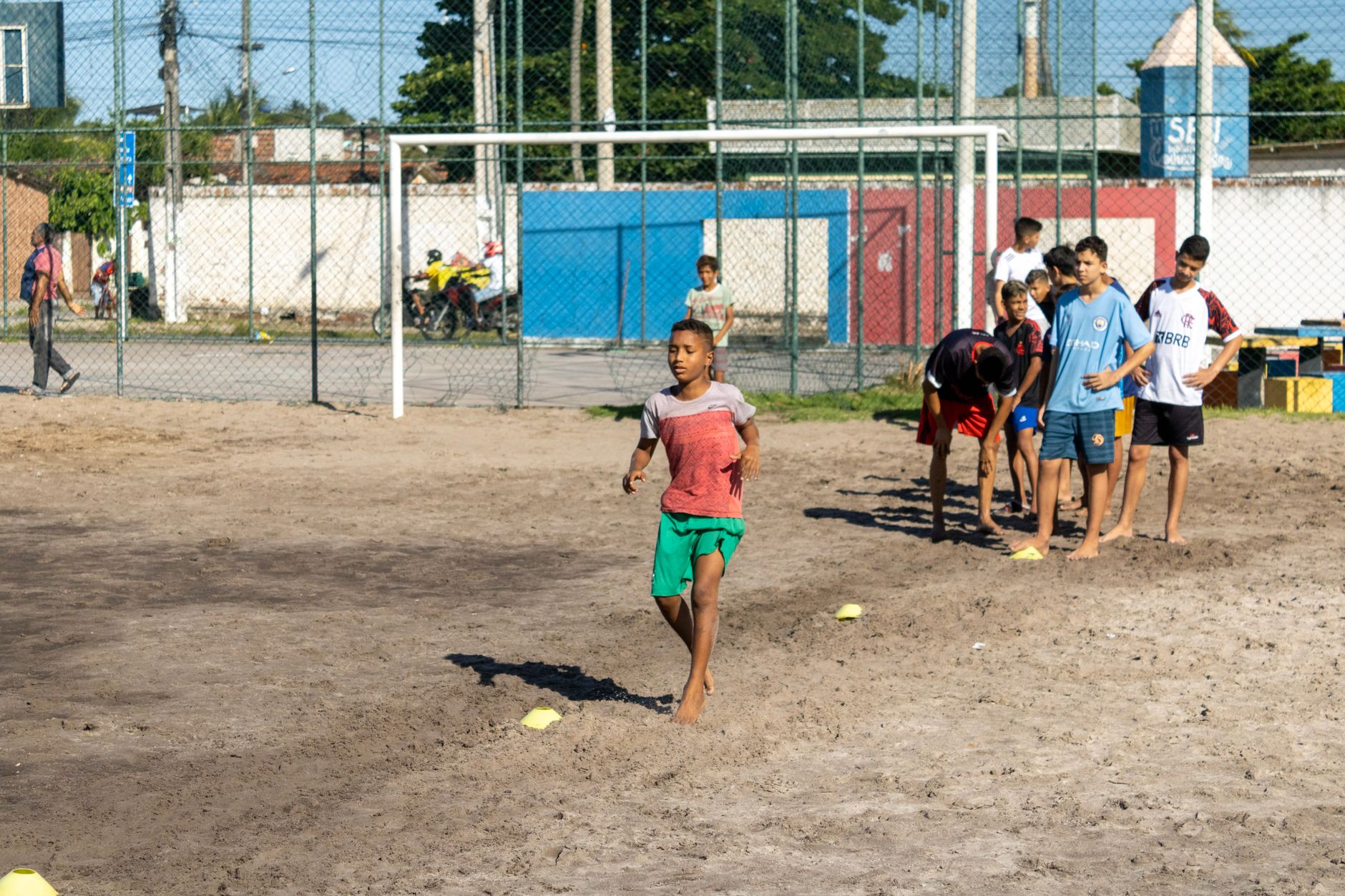
There’s something that happens when athletes train together that no private session can fully replicate. Competition, encouragement, and the energy of working alongside peers who are grinding just as hard — that’s where grit gets built. Proverbs 27:17 says it plainly: iron sharpens iron. Group training is that principle in action.
Group sessions push athletes to compete in real time. A kid who runs a 40-yard dash alone might coast. Put another athlete next to them and they’ll find another gear. That competitive energy accelerates physical development and teaches athletes how to perform under pressure — which is exactly what games and matches demand.
Group training also develops social and emotional skills that sport demands: communication, accountability, encouraging teammates, and learning to lead. These aren’t soft add-ons — they’re the intangibles that separate good athletes from great ones. The faith, character, and sports development philosophy at Grit + Grace is built around this idea: becoming a better athlete and a better person aren’t separate goals.
The Centers for Disease Control and Prevention (CDC) recommends that children aged 6–17 get at least 60 minutes of moderate-to-vigorous physical activity daily, including muscle-strengthening activities at least 3 days per week. Group training — especially in a high-energy outdoor or gym setting — is one of the most effective (and fun) ways for kids to hit those benchmarks consistently.
Group sessions at Grit + Grace are also more accessible. Free park sessions lower the barrier completely, so no young athlete in Oak Lawn or Chicago Ridge gets left out because of cost.
Group training is likely the right fit if your athlete:
- Thrives on competition and peer energy
- Needs to learn how to perform under pressure
- Is working on general fitness, conditioning, or multi-sport athleticism
- Would benefit from building team-oriented character skills
- Is at an intermediate level and ready to be pushed by peers
| Factor | 1-on-1 Training | Group Training |
|---|---|---|
| Coach Attention | 100% focused on your athlete | Shared — builds independence |
| Program Customization | Fully individualized per session | Age/skill-group appropriate |
| Competitive Energy | Coach-driven motivation | Peer-driven, game-like intensity |
| Character Development | Deep 1-on-1 mentorship | Teamwork, leadership, accountability |
| Best For | Skill gaps, tryout prep, beginners | Conditioning, confidence, team sport prep |
| Cost at Grit + Grace | Paid gym sessions (first free) | Free park sessions available |
| Injury Safety | Highest — constant supervision | High — coach-supervised structure |
What Qualified Coaching Looks Like in Either Format
Here’s the thing most training programs won’t tell you: the format matters less than the coach standing in front of your kid. The Aspen Institute Project Play found that 38 percent of parents cite coaching quality as one of the most important factors when choosing a sports or training program. That number should be higher.
The American Academy of Pediatrics is equally clear: strength and athletic training for kids can be safe and highly effective — but only when supervised by a qualified instructor using individualized programming. A chaotic group session with an unprepared coach is worse than no training at all.
Coach Eddie is NAYS-certified, CPR/First Aid trained, and brings the lived experience of rebuilding his own body and life through faith and hard work. Whether it’s a 1-on-1 speed session or a park group workout, every athlete gets a coach who sees them as a whole person — not just a rep count. That’s the standard at Grit + Grace, regardless of format.
For a deeper look at how speed and agility programming is structured by age and skill level, check out the speed and agility training guide for young athletes — it walks through drills, benchmarks, and what development actually looks like at each stage.
The Honest Answer: Most Athletes Need Both
The best athletic development doesn’t happen by picking one lane and staying in it forever. The most successful young athletes — from Oak Lawn basketball courts to Chicago Ridge soccer fields — use 1-on-1 work to build foundational skills and fix technique, then bring those skills into group settings where they’re tested under pressure.
Think of it like this: 1-on-1 sessions are the lab. Group training is the game. You need both to build an athlete who performs when it counts.
At Grit + Grace Sports Academy, athletes can do exactly that. Start with a personalized session to assess where they are and what they need. Layer in group training as skills develop and confidence grows. Every step is tracked, every goal is intentional, and faith and character are built into both formats — because becoming a better athlete and a better person are the same mission.
Whether your kid is 6 or 16, plays basketball, football, soccer, volleyball, or just wants to get faster — there’s a path here that fits them. And it starts with one free session, no commitment required.
Start with a free session — fill out the quick form and Coach Eddie will set up a time that fits your athlete’s goals. Book a free session today and let’s figure out exactly what your young athlete needs to level up.
Leave a Reply